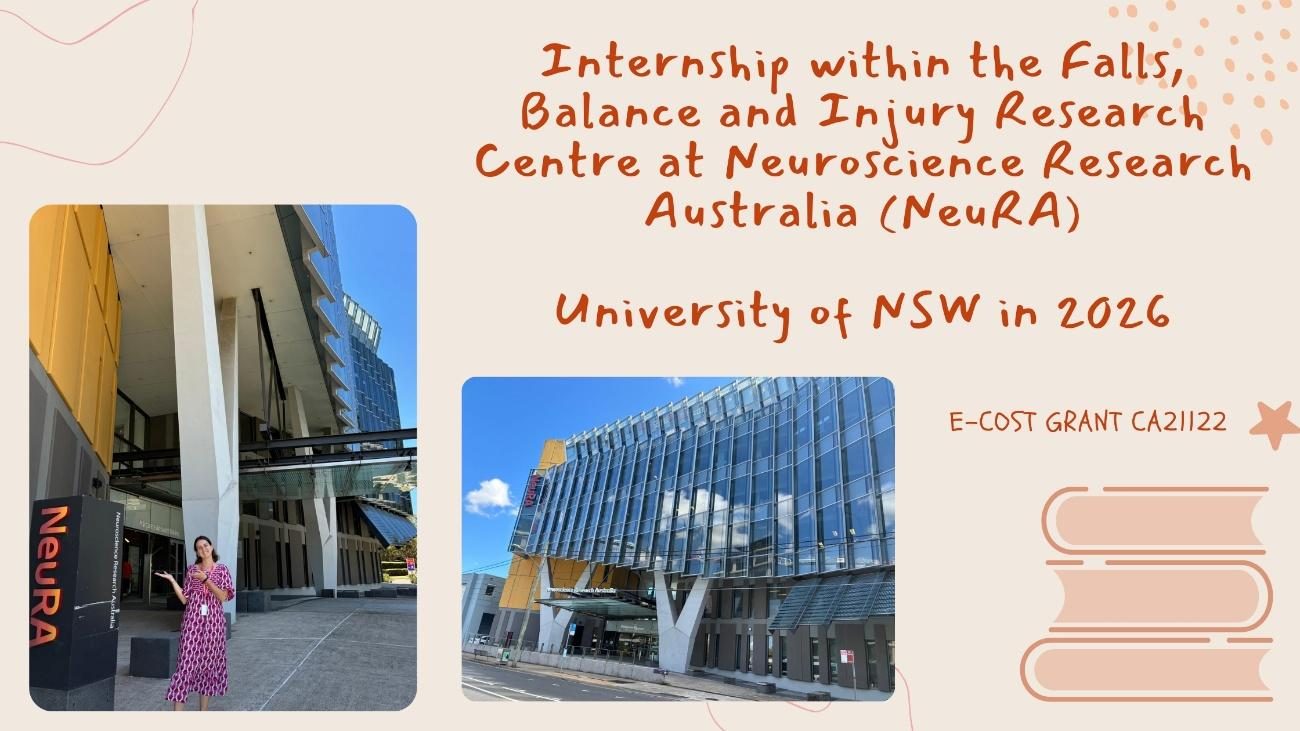
Internship within the Falls, Balance and Injury Research Centre at Neuroscience Research Australia (NeuRA) University of New South Wales in 2026
Multifocal Glasses and Fall Risk: A Visual Challenge in Ageing
Falls are one of the leading causes of injury and loss of independence in older adults, and vision is a key factor in maintaining safe mobility. Ongoing vision monitoring by the appropriate eye care specialists in older patients is essential for fall prevention and should be systematically considered within comprehensive geriatric assessment included in the sensory domain as a relevant modifiable risk factor. Several studies have demonstrated that regular ophthalmologic follow-up is associated with a reduction in fall incidence among older adults.
Multifocal glasses—such as bifocals and progressive addition lenses (PALs)—are commonly prescribed to correct presbyopia, allowing both near and distance vision with a single pair of spectacles. While convenient, increasing evidence suggests that they may contribute to fall risk. Multifocal lenses can blur the lower visual field, reduce depth perception and contrast sensitivity, and introduce optical distortions. When older adults look down while walking or descending stairs, they may inadvertently use the near portion of the lens, impairing accurate judgment of step edges and ground-level obstacles. Experimental studies show that this can increase variability in foot placement and toe clearance, raising the likelihood of trips. Epidemiological research further indicates that multifocal wearers experience higher rates of trip-related and outdoor falls. Importantly, randomized controlled trials have demonstrated that using single-vision distance glasses during mobility— particularly outdoors—can reduce falls in physically active older adults.
Multifocal spectacles remain convenient but may increase fall risk. Education on proper use, including chin-down strategies, and encouraging single-vision distance glasses outdoors can improve safety. Prescription changes should be gradual to allow adaptation and minimize magnification and prismatic effects. Regular eye exams, cautious refractive updates, and individualized visual management are essential for fall prevention. Geriatricians should remain vigilant in identifying visual deficits and ensure timely referral for comprehensive ophthalmological assessment and management. An interdisciplinary and collaborative approach between ophthalmologists and geriatricians may facilitate earlier detection, integrated management, and improved outcomes, particularly in the prevention of falls.
Throughout this research rotation and participating in other projects involved, I have also strengthened my skills in advanced statistical methods. I have also had the opportunity to observe laboratory-based studies involving volunteer participants, which has enriched my understanding of translational research. The project is closely supervised by three research mentors, and progress is discussed in two weekly meetings, where findings are critically reviewed from multiple perspectives. This collaborative environment has been fundamental in refining the analytical approach and strengthening the scientific framework of the study, as well as enriching a part of my work.
Ultimately, this research seeks to contribute to a more comprehensive understanding of falls risk, emphasising the importance of integrating visual impairment as an intrinsic factor to falls. By adopting a multidimensional approach, we hope to inform future clinical strategies aimed at improving prevention and promoting healthy ageing.